

Our second attempt at IARC Mission 10 in Huntsville, Alabama.
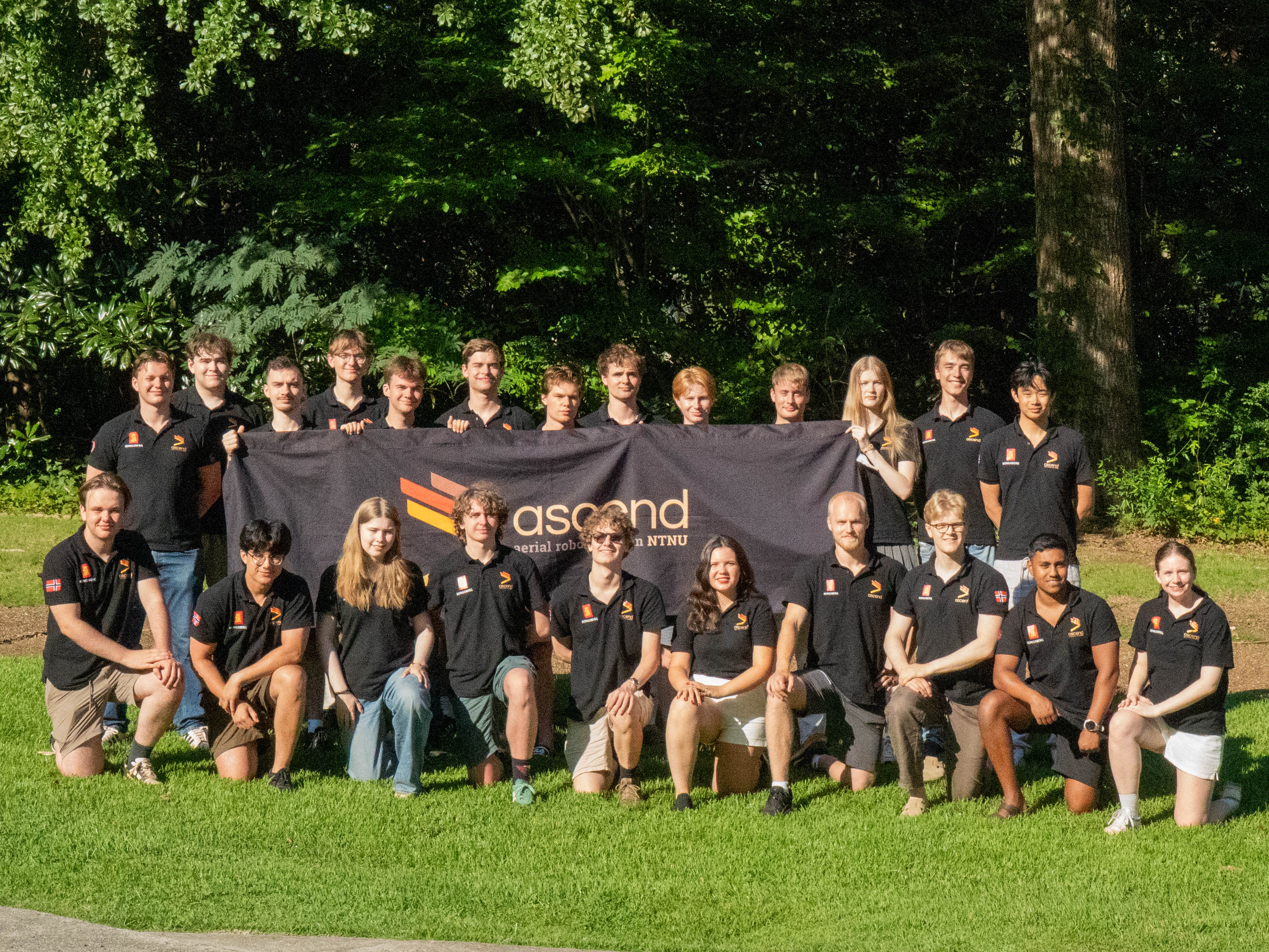
Earlier this month we competed in IARC Mission 10, in Huntsville Alabama. This was the second arrangement of the mission, and our second attempt. We competed against a total of 6 teams, from the USA, Poland, India and China. And we were one of the 4 teams who passed the proof of autonomous flight and got qualified to do the final run. If you are unsure what the IARC Mission 10 is, you can read more here.
The competition was held during our recruitment period, which meant that fewer people participated than usual. A total of 23 team members traveled to the USA to represent Ascend. We had booked an Airbnb in Guntersville, an one hour drive from Huntsville. The Airbnb was booked for a week, and was our main base for the competition.
The competition took place on 12th of August 2026, in Huntsville, Alabama (USA). 10th and 11th of August were used as testing days, so that we could test our systems in an environment we haven’t tested in before. The American weather posed way higher temperatures and humidities than we have ever had during testing in Norway.
Testing
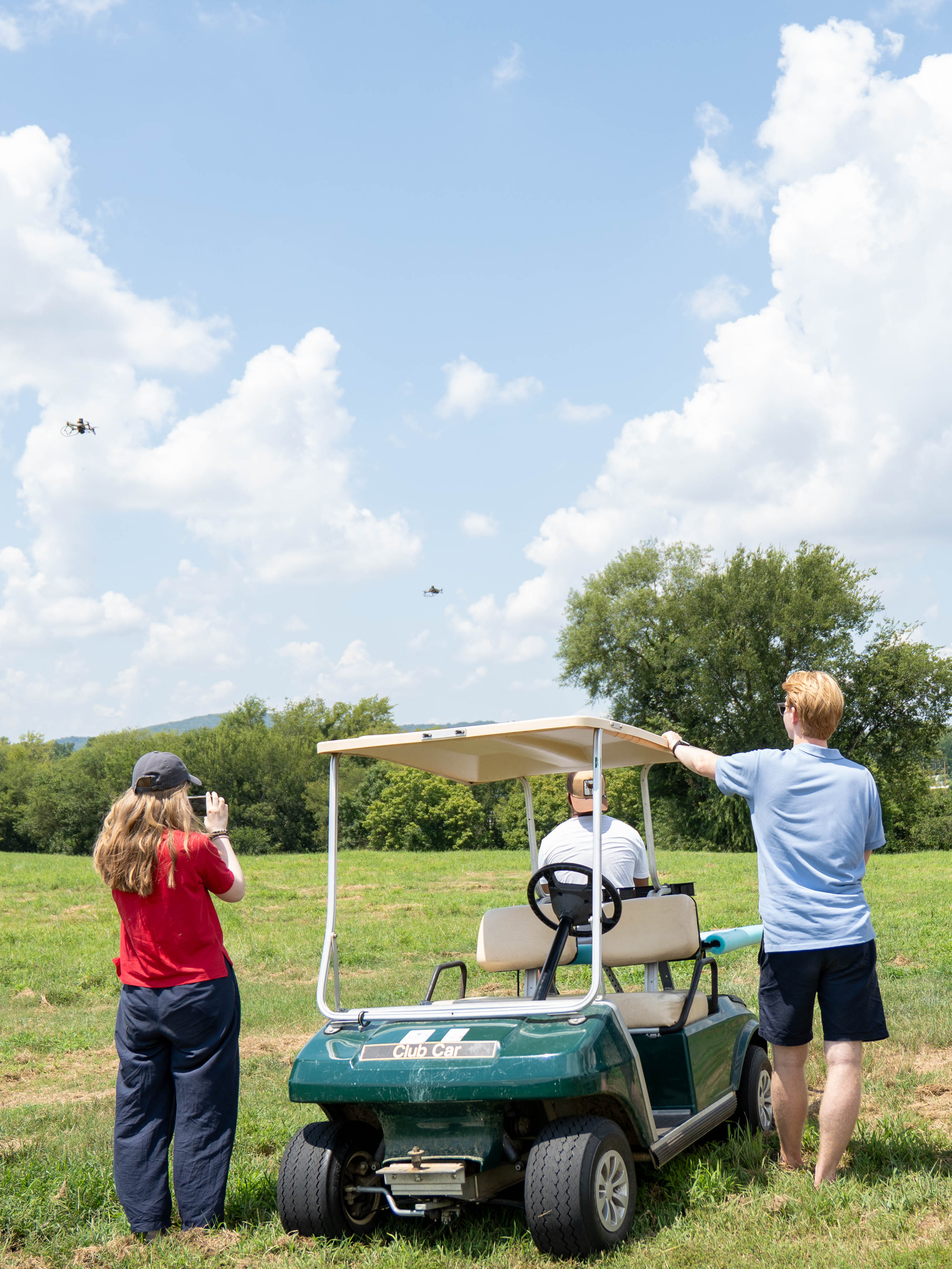
After arriving in Huntsville, we started testing for IARC Mission 10. We got the opportunity to utilize the same local RC club’s airfield as the year prior, which provided large open areas and even a golf cart for transportation! We also had the pleasure of sharing these facilities with some of our competitors flying in from all over the world.
Test day 1:
We ran into bad luck before the competition even began: our baggage was lost in transit to the US, taking with it critical gear including our RC controllers, the LiPo charger, and the WiFi router. Replacing it stateside proved harder than expected. In the end we were left with a single RC controller (until testing day 2), which meant we could only test one drone at a time.
That constraint shaped the day, and we needed to split the group in two: test crew and standby crew. The standby crew was left at the airbnb enjoying the lake and on standby to drive out with equipment when it arrived. The test crew could test with one drone, since one of our members brought their one drone controller. And the focus became verifying the replacement router, which turned out to perform poorly, and confirming that everything worked end to end on a single airframe. We ran full mission attempts to test the app integration, using voice commands throughout, and spent the remaining time validating our autonomy logic, obstacle avoidance in particular.
Test day 2:
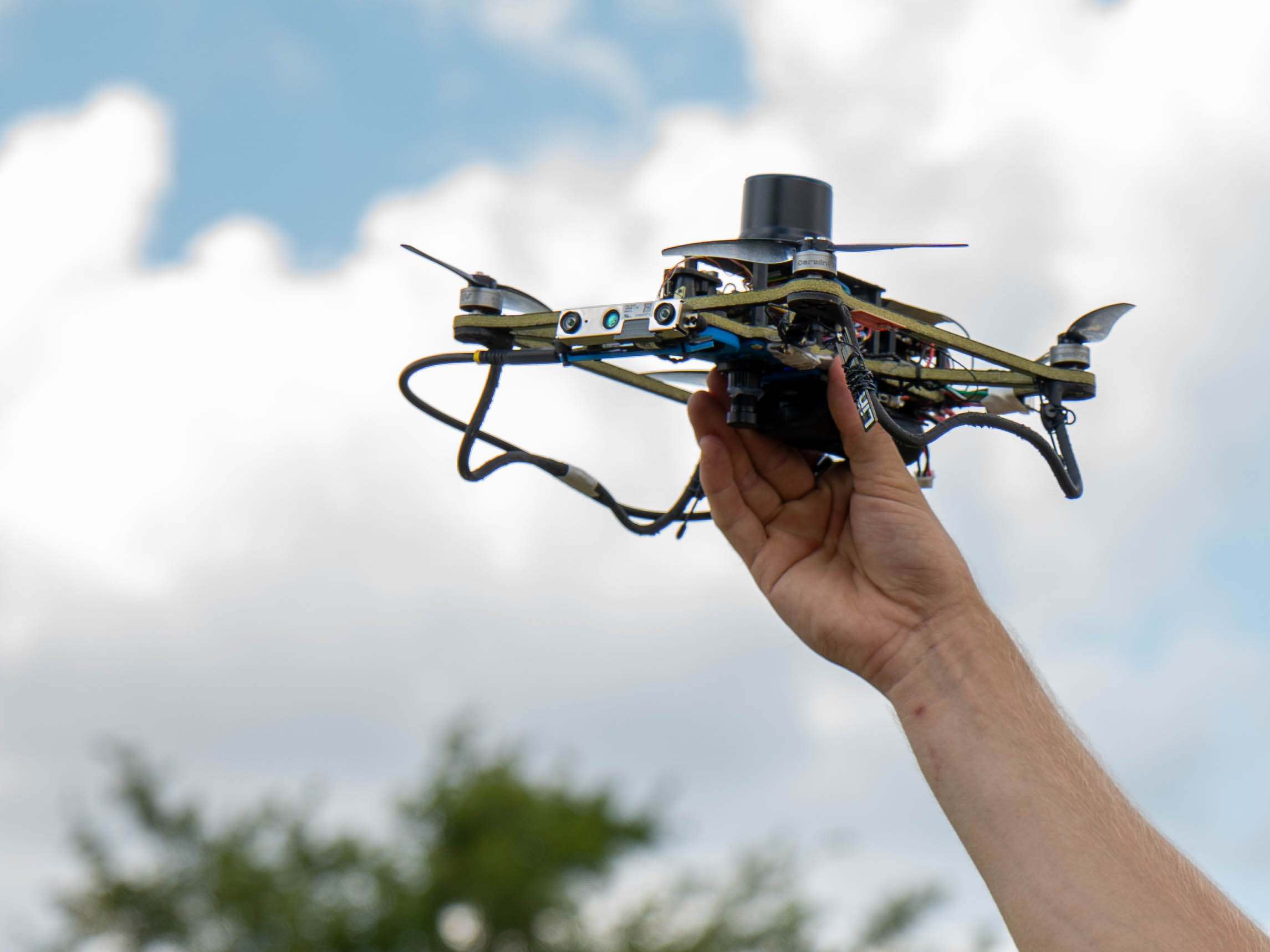
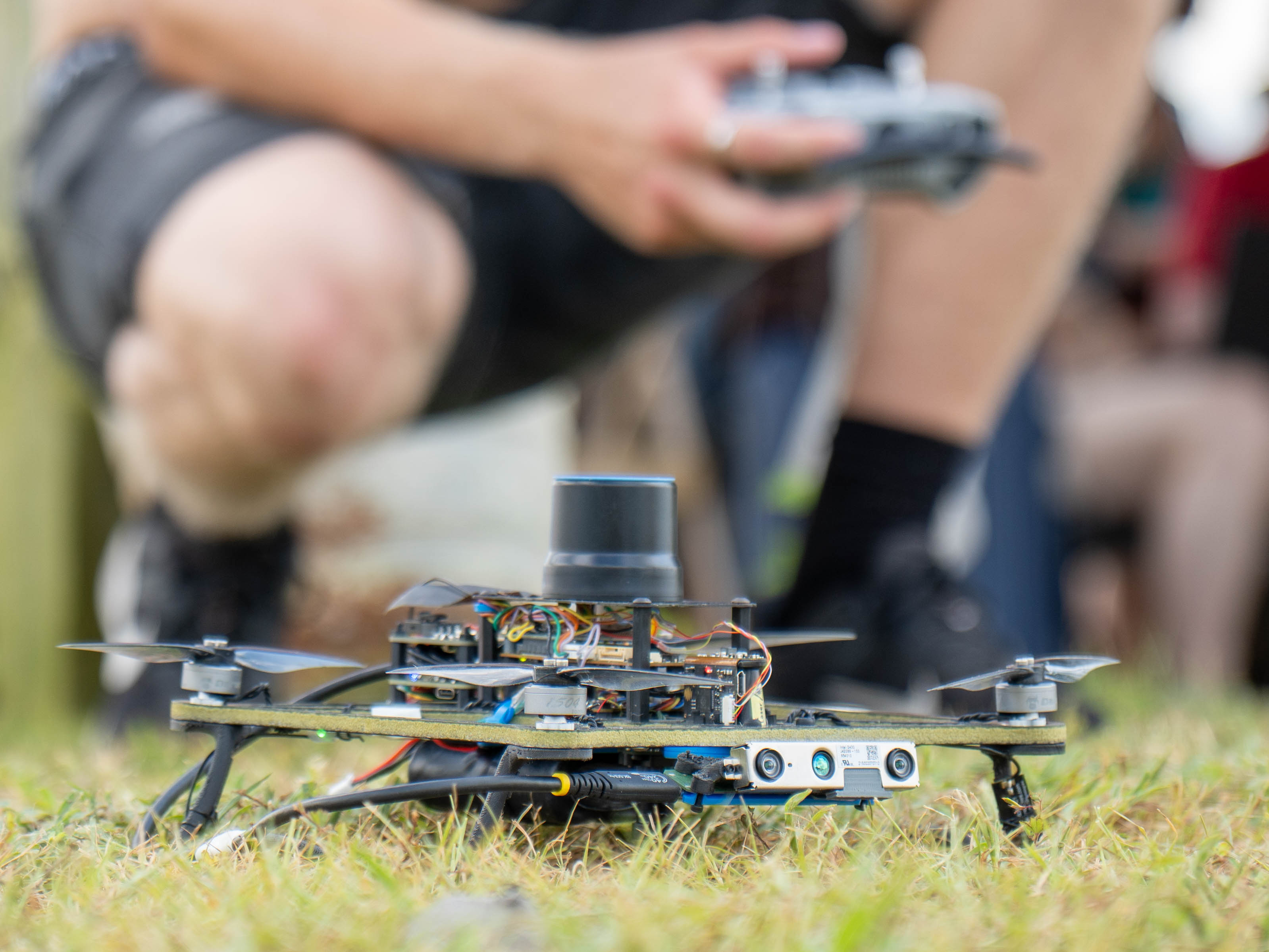
This day split into two parts. In the morning we were fortunate enough to borrow an RC controller from the Indian team, which brought us up to two flyable drones and let us test the swarm properly for the first time. Verifying that the swarm logic worked efficiently became the main focus, and it held up well, with the exception of commands sent from the app, which required a fix. From there we moved to full mission runs with two drones and mines laid out on the ground, checking that the path found across the minefield came out in the correct format and was itself correct and viable. After some iteration, this worked well.
In the evening we were also to attend an infomeeting from the organizers together with all the other teams. The RC controllers came right before, and the test crew set off after the infomeeting to try to fly with all four drones. The rest of the group ordered food and we all enjoyed takeaway together back at the testing site.
Once the RC controllers were set up we had all four drones flying, and our attention shifted to getting a swarm of four to work as a unit. This proved difficult, largely because the router could not handle the added traffic. At ten in the evening, the night before the competition, we bought a replacement and got it working. It performed considerably better than the previous one, though still not perfectly, and drones would occasionally drop connection. These were problems we had never seen with our original router, the one lost in transit. By the end of the night things appeared to be working, but competition day would be the first time we ever attempted a full mission run with all four drones in the US.
Competition day
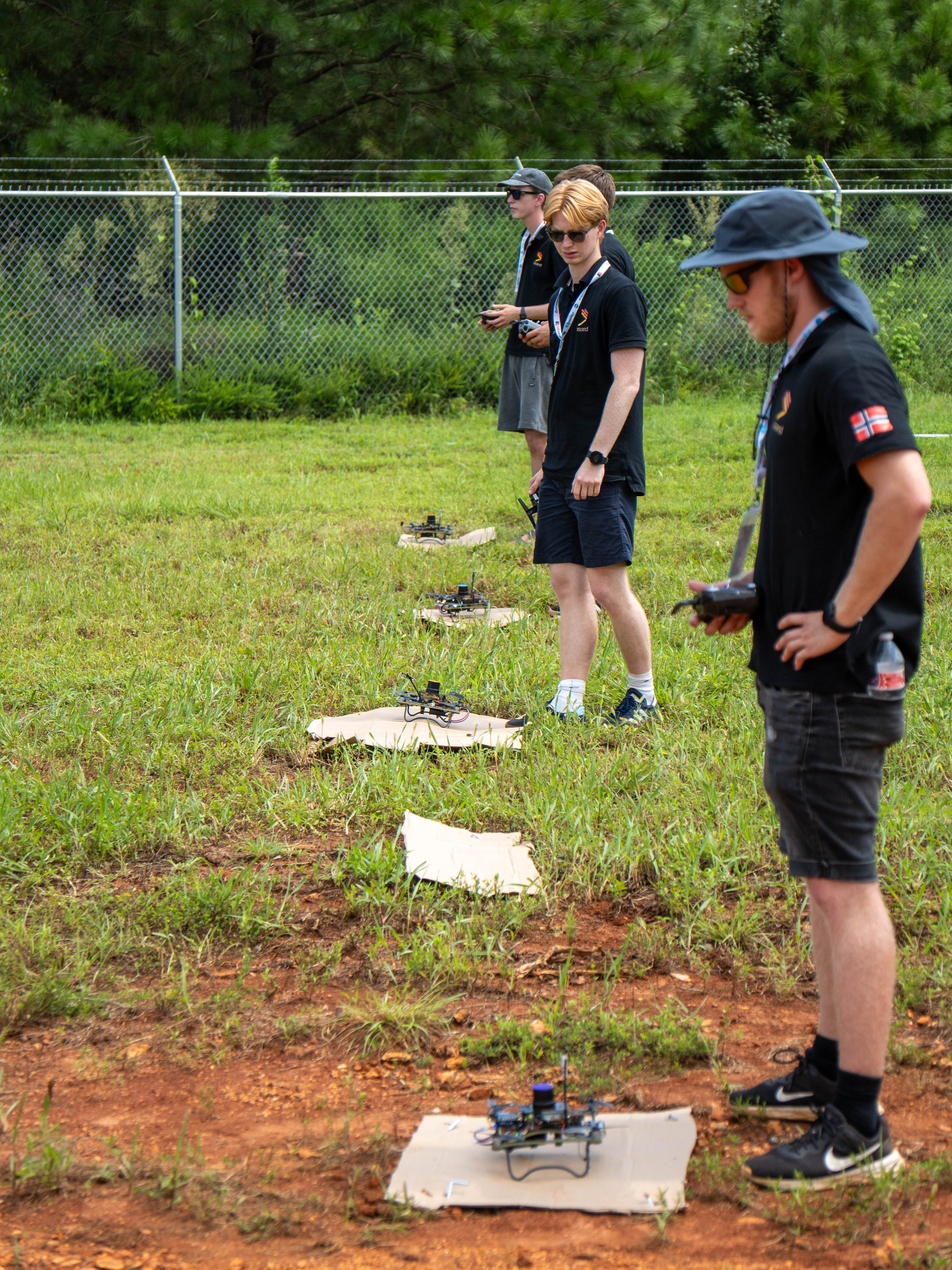
As mentioned, we had never managed a full four-drone mission run before this. That left us with a good deal of nerves in the early hours of competition day. Setting up went smoothly enough, and we were among the last teams in the running order, which meant a long wait before our first attempt.
That first run turned out to be our cleanest. Beforehand we had to demonstrate proof of autonomous flight, which went well, apart from having placed the drones a little too close together and catching some contact between two of them on takeoff. After that it was smooth sailing. The full mission run worked on the first try: all four drones lifted off on voice command, searched the area, and landed. The problem only surfaced afterward, when we realized the mine detection model running onboard was one of our oldest versions, so we had not discovered a lot of mines. That was a disappointing way to lose a good run.
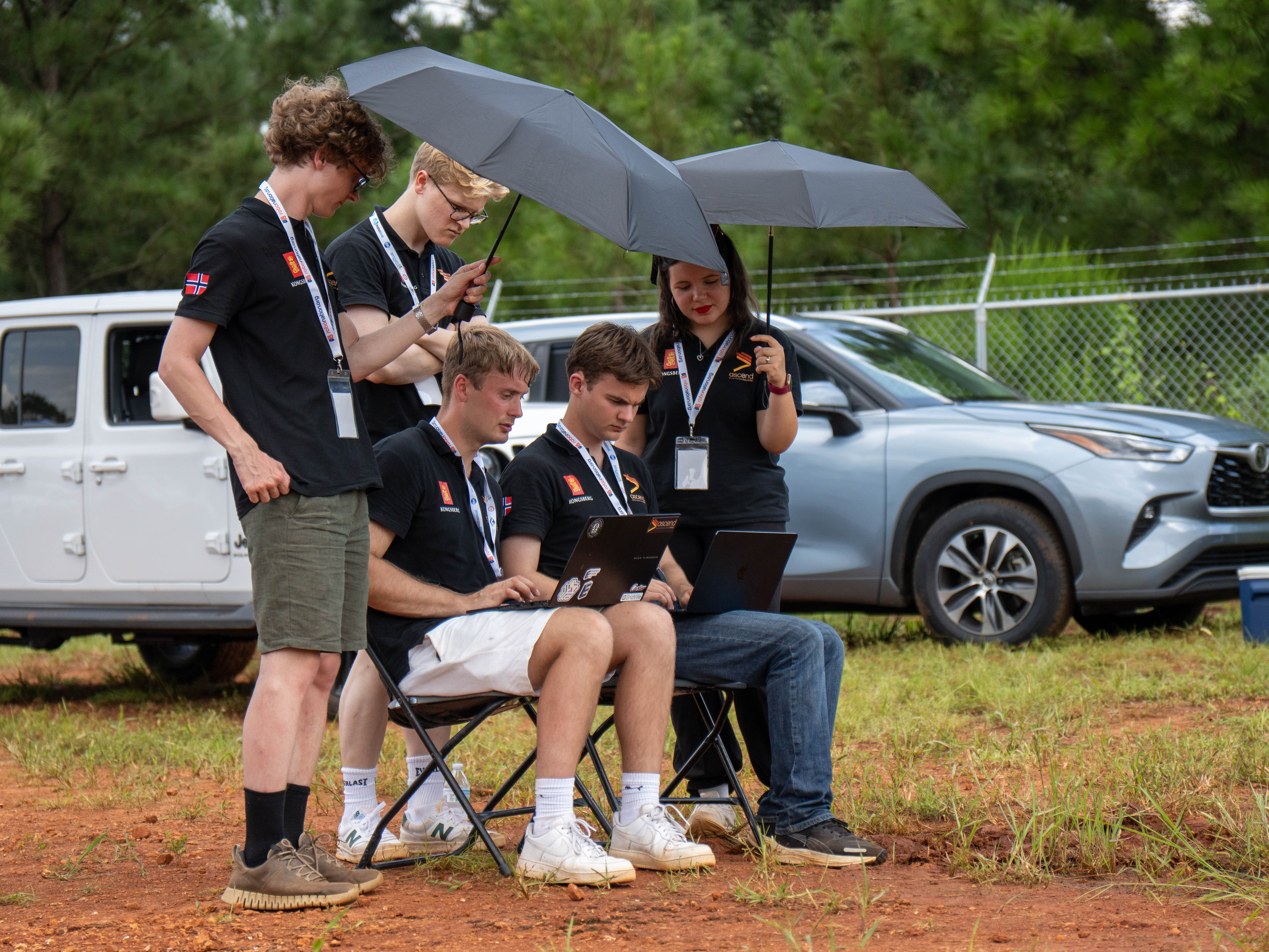
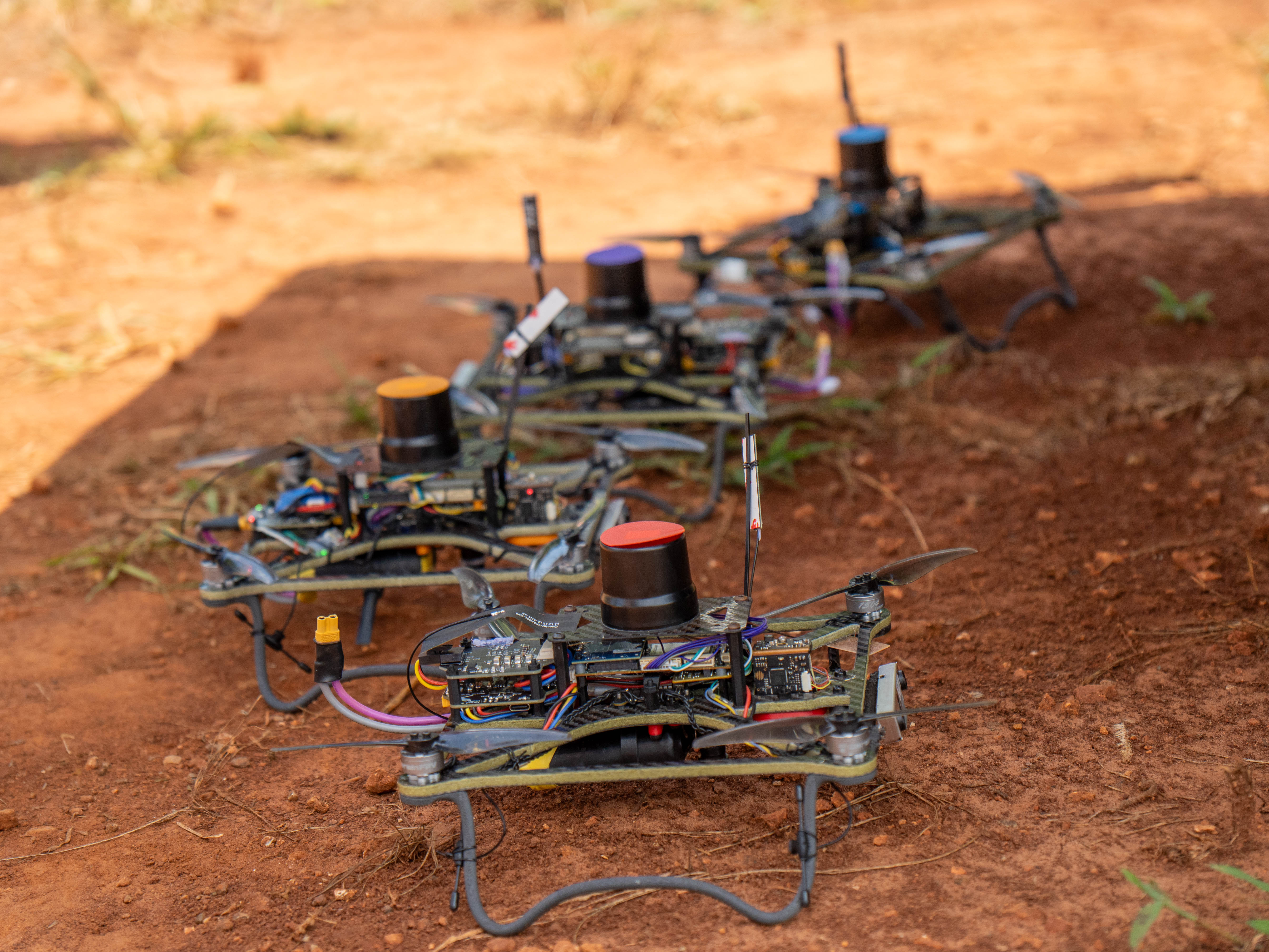
We spent the time between the first and second runs switching to the correct model. A thunderstorm also passed through in that window, driving the humidity up sharply. Combined with temperatures around 36°C, this had a clearly negative effect on the router we had bought the night before, and our connection degraded steadily as the day went on. The consequences were critical. In both remaining runs we flew all four drones and found nearly every mine, but the master drone lost connection and landed in the middle of the field. Since the path was computed on the master, we never received a route in real time. Reconstructing it afterward from the mine data gathered by all four drones produced an excellent path, missing only a single mine, which put us one or two feet away from winning the competition. You can see the result here.
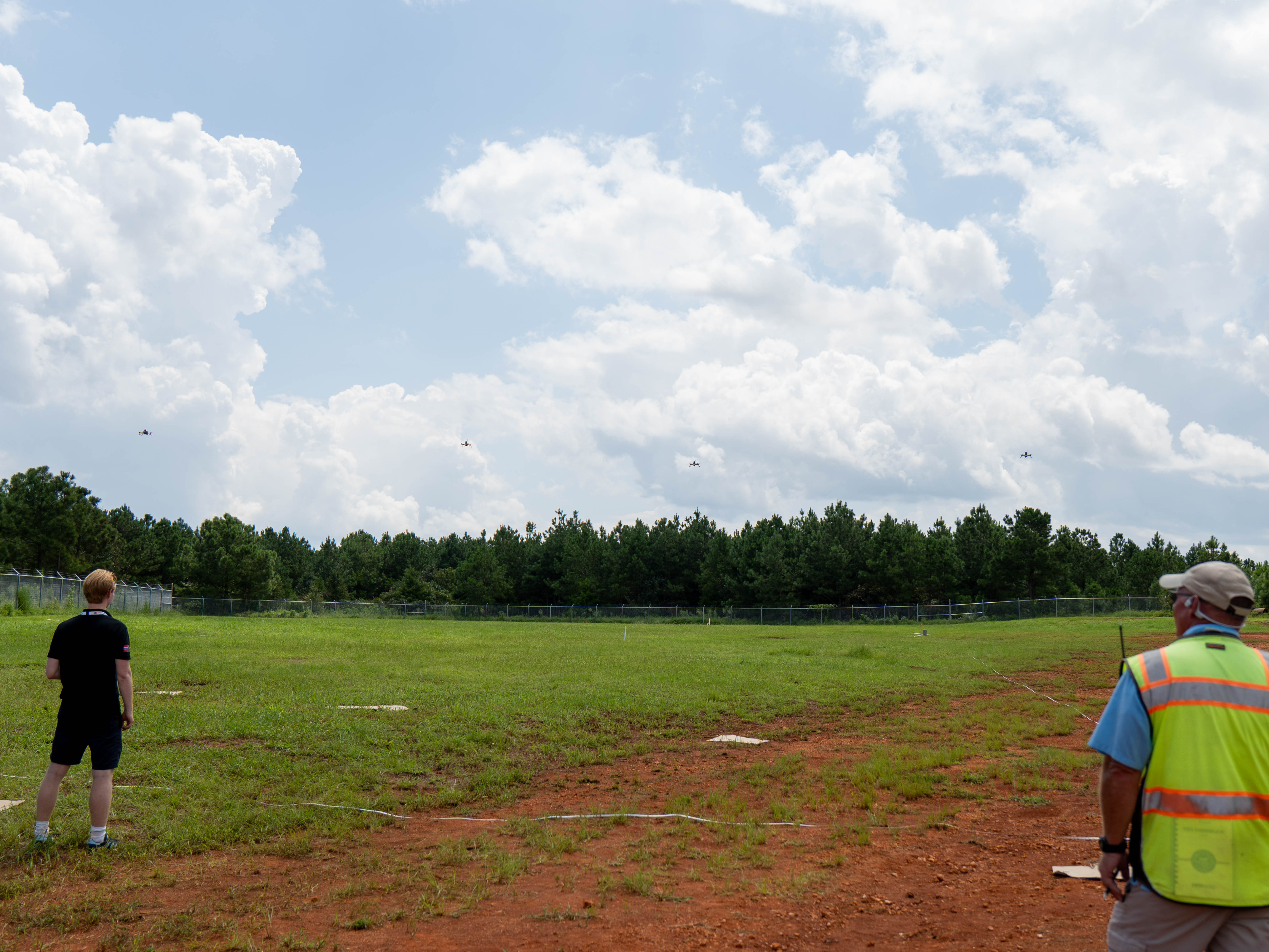
We walk away from this year proud. We had a working system, and the swarm autonomy performed well. Our attempt was also well ahead of the other teams, and we hope to return, find that last mine, and put an end to this mission.
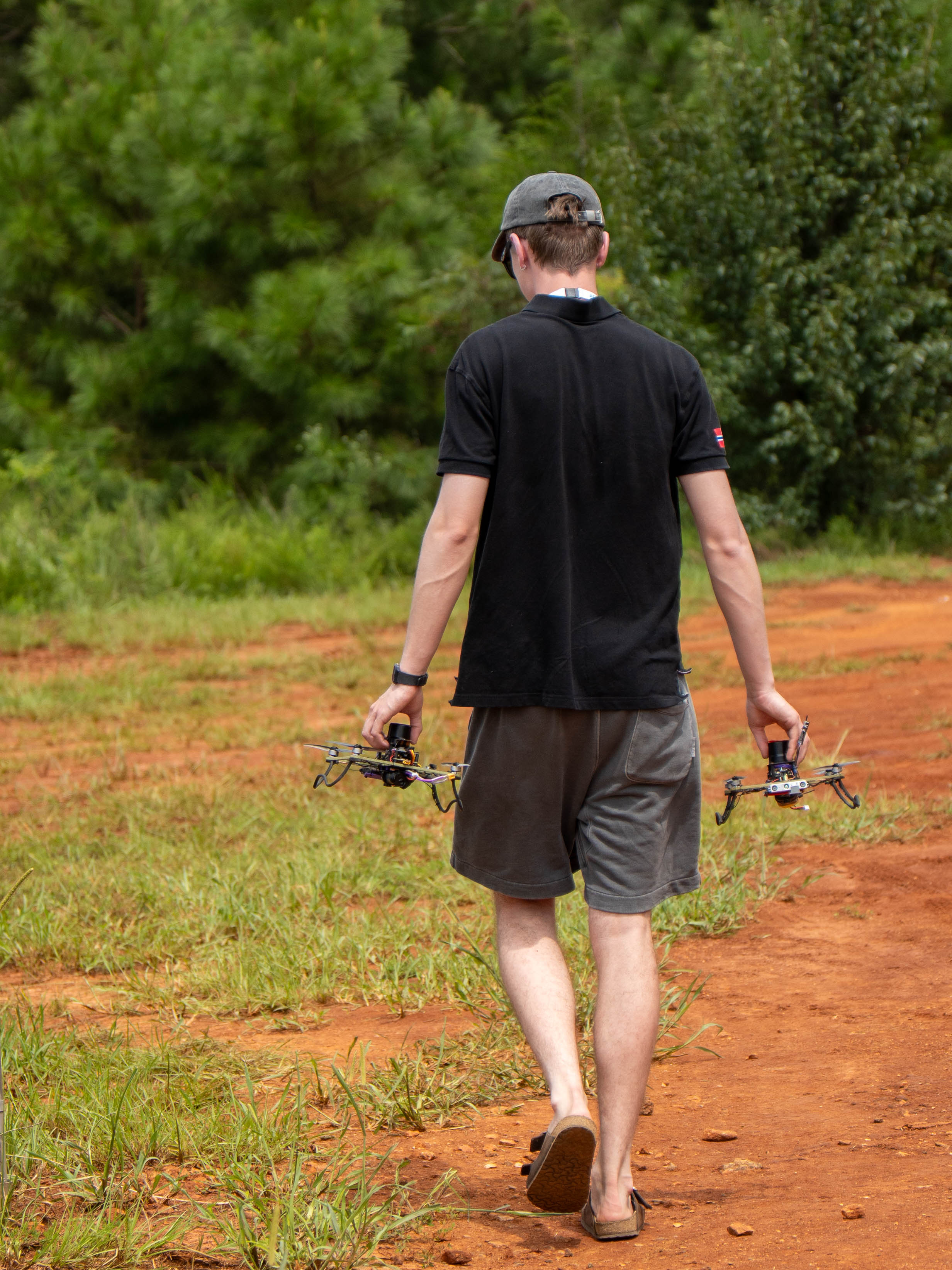
We would like to thank all of our partners for making this year and mission possible.
